Is There Student Housing in Seoul Built for Students? Here's How Each Type Really Works
You're moving to Seoul to study, and every search shows a different word: dormitory, one-room, officetel, share house, hasuk.
Some look built for students, others look like ordinary apartments, and it's hard to tell which ones will actually work for a semester.
"Is there a housing type in Seoul made for students, or do I just rent a regular apartment?"
"Which one won't lock me into a year-long contract I don't need?"
Only one type is built specifically for students, and the rest are general housing that students rent.
Here's what each type offers, how they compare, and a short-stay option for the times when none of them fit.
Which Housing Types Do Students Use in Seoul?
Are there specific housing types in Seoul that cater to students?
Partly.
The university dormitory is the one type made for students.
Everything else in Seoul is general housing that students commonly rent, and each has its own contract length and upfront cost.
Here are the six types you'll run into.
① University dormitory. Run by or connected to your university, with rules and fees set by the school. Places are limited, so not everyone gets one. Check your university's dormitory notice and international office first.
② Hasuk (boarding house). A private room in a home, often with meals included. It has traditionally suited students, but availability varies by neighborhood, so check near your campus.
③ One-room (studio). A private room with its own bathroom and a small kitchen area. Usually rented on a one-year lease with a deposit plus monthly rent.
④ Officetel. A studio-style unit in a mixed-use building, often near subway stations. Many include a bed, desk, and basic appliances, and management fees are often billed on top of rent.
⑤ Share house. Your own bedroom in a home where the kitchen and living room are shared. Often a lower cost than living alone, with more social contact.
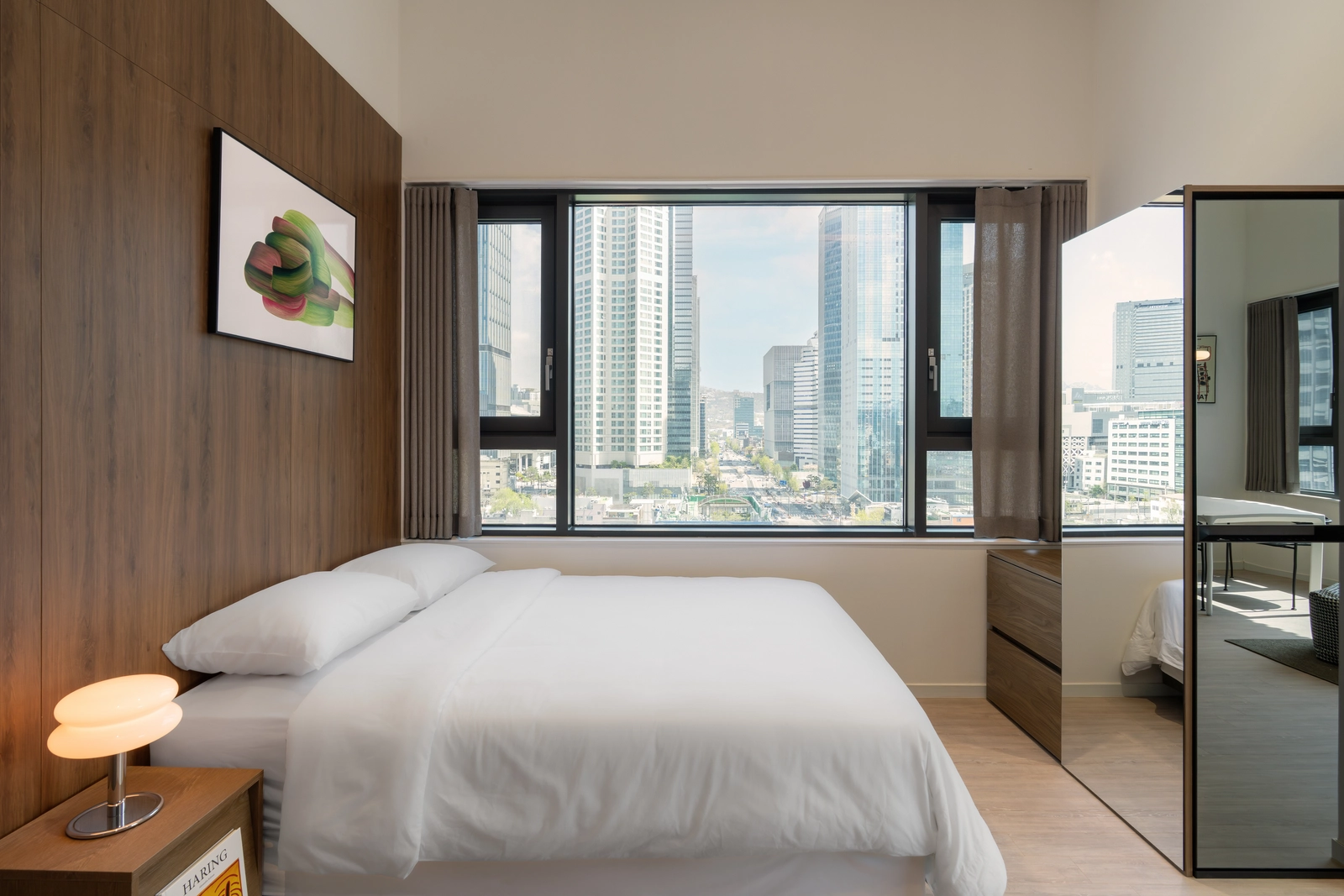
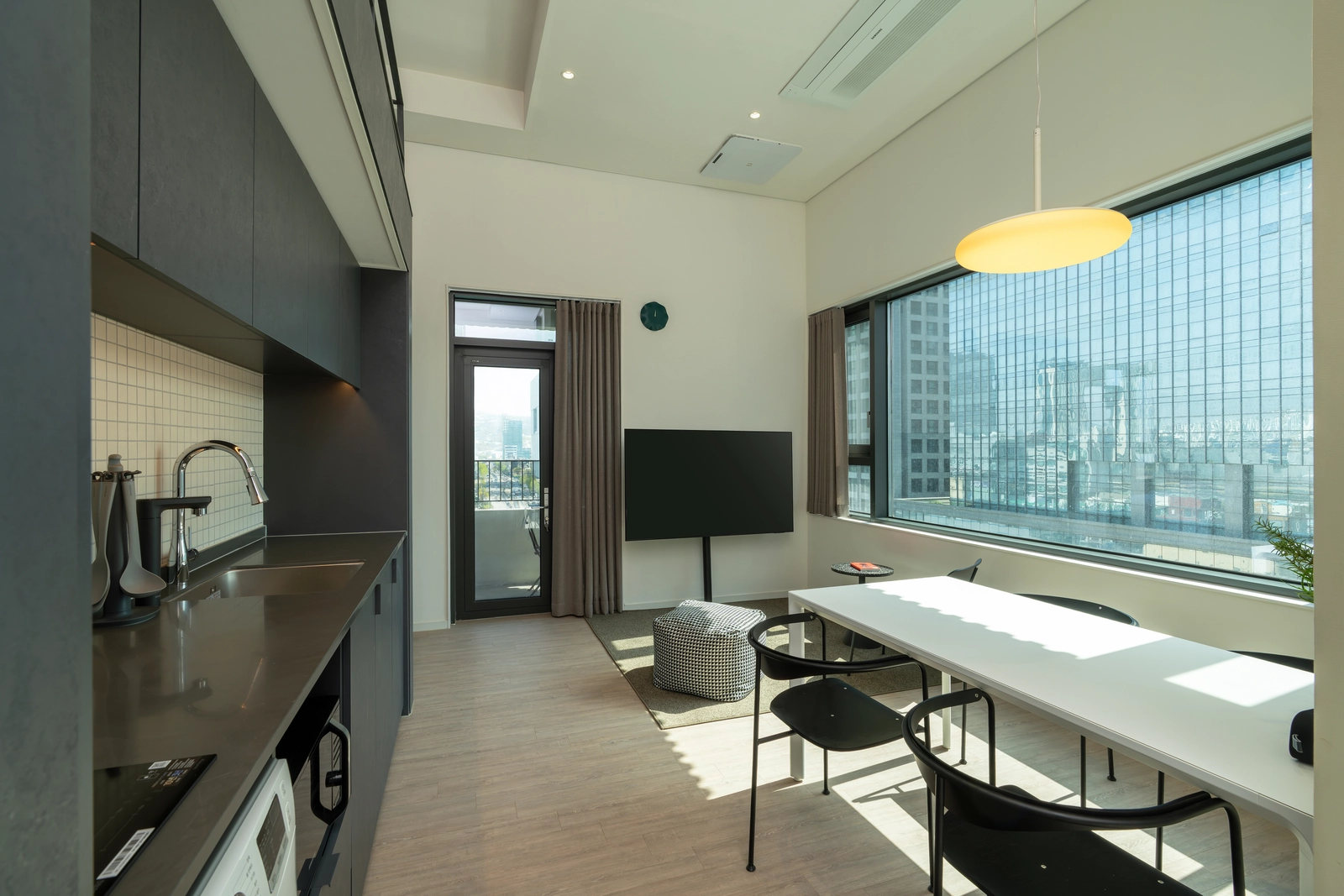
⑥ Short-term furnished room. A furnished room rented for days, weeks, or months instead of a year. Useful for your first weeks, one semester, or an exchange stay.
Which housing type is best for international students in Seoul?
It depends on three things: how long you'll stay, how much you can pay upfront, and how much privacy you need.
A dorm is the simplest if you get a place.
A one-room or officetel suits a stay of a year or more.
A share house suits students who want company and a lower cost.
A short-term furnished room suits anyone who needs to start before the plan is settled.
Seoul student housing compared | Typical contract | Upfront cost | Privacy | Good for |
|---|---|---|---|---|
University dorm | Set by the university | Fees set by the university | Varies by room type | Students placed by their school |
Hasuk | Varies by house | Varies | Private room, shared home | Students who want a home-style setup |
One-room | Usually 1 year | Deposit plus monthly rent | High | A long, settled stay |
Officetel | Usually 1 year | Deposit plus monthly rent, management fee often extra | High | A long stay near a station |
Share house | Varies, often shorter | Often lower than a one-room | Private bedroom, shared common areas | Budget and social contact |
Short-term furnished room | From days to months | Varies by listing | High | First weeks, one semester, exchange stays |
※ General patterns only. Terms vary by building, host, and university.
What Makes Student Housing Hard for International Students
The room type is rarely the problem.
The contract usually is.
① Many one-rooms and officetels ask for a deposit worth several months of rent, due before you move in
② Standard leases usually run for a year, longer than a single semester
③ Many listings and contracts are only in Korean
④ It's hard to verify a room when you're still abroad
A furnished room with a shorter contract and a platform handling the payment removes most of these.
plott LIFE Fills the Gap Between a Dorm and a One-Year Lease
plott LIFE is built for the stays that the other types don't cover well.
plott LIFE's direct-managed listings have these terms.
Deposits start from 0 KRW.
You don't need to set aside months of rent before you've even settled in.
Rent from 7 days, day by day.
Choose the exact number of days you need, then extend once you know your routine.
Rooms are fully furnished.
Arrive with your luggage, no furniture shopping required.
Rent is one all-in monthly rate.
Utilities and management fees are mostly bundled in, so there are fewer separate bills to figure out.
Stays of 28 days or more can pay rent month by month.
This applies across plott LIFE, including individual host listings, and it's easier on a student budget than paying everything at once.
Standard 1-year rental | plott LIFE (direct-managed) | |
|---|---|---|
Deposit | Commonly several months of rent | From 0 KRW |
Minimum stay | Usually 1 year | From 7 days |
Furnished | Varies by listing | Fully furnished |
Utilities | Often billed separately | Mostly bundled in one all-in rate |
Paying rent (28+ days) | Standard monthly rent | Monthly payment supported |
Direct-managed listings only. Individual host listings set their own deposit and contract terms, so check each listing's details. Some rooms confirm instantly, while others need host approval after payment.
Do I need to know anything before I sign a short-term room?
Yes, check address registration.
plott LIFE's direct-managed rooms don't support address registration.
For individual host listings, each host decides.
If you need to register your address, ask your university's international office and the host before you sign anything.