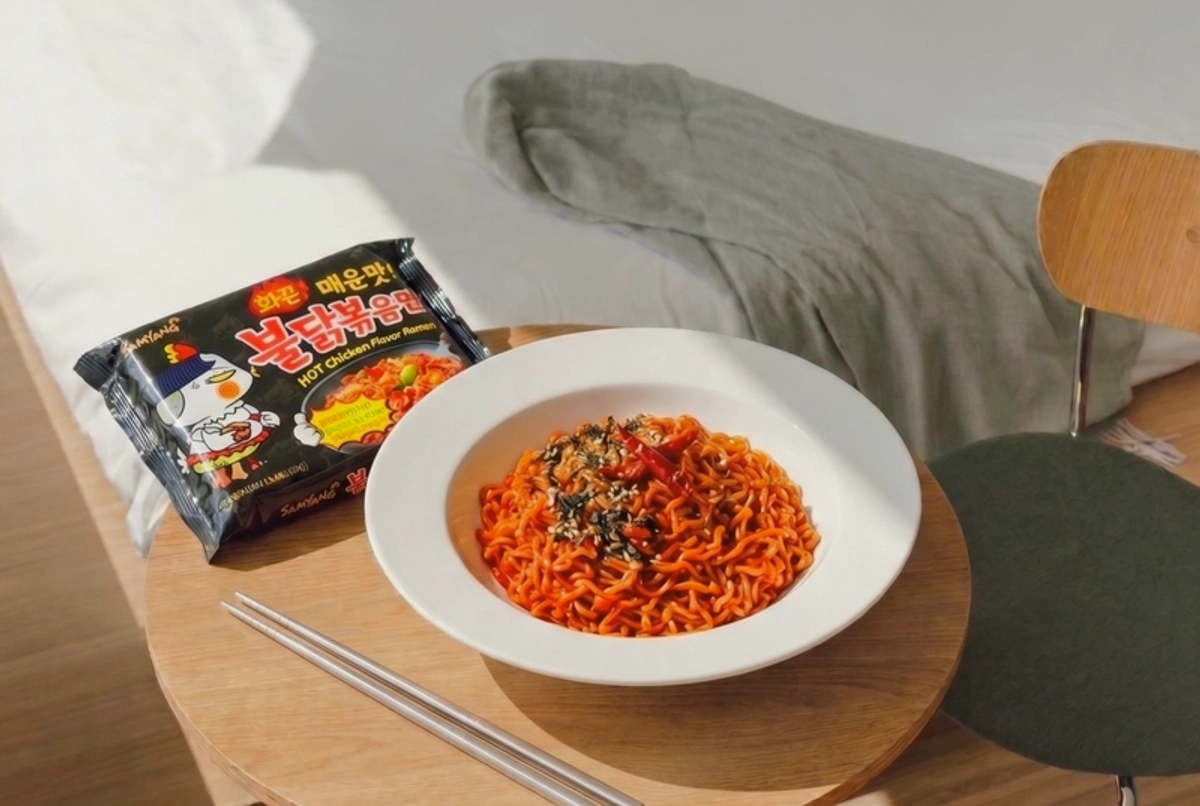
"불닭볶음면의 정체가 궁금해요"
불닭볶음면, 한 번쯤 들어봤을 거예요.
유튜브, 틱톡, SNS에서 외국인들이 땀 흘리며 먹는 영상으로 전 세계에서 유명해진 그 라면이에요.
그런데 실제로 불닭볶음면 스코빌이 얼마인지, 내 나라 음식과 비교하면 어느 정도인지 정확히 아는 사람은 많지 않아요.
이 글 하나로 불닭볶음면 맵기에 관한 모든 것을 정리할게요.
불닭볶음면 스코빌 지수 정확히 얼마일까?
불닭볶음면의 스코빌 지수(SHU)는 4,404 SHU예요.
스코빌(Scoville Heat Unit)은 매운맛의 강도를 측정하는 국제 단위예요.
숫자가 높을수록 더 맵고, 0에 가까울수록 맵지 않아요.
음식 스코빌 (SHU)체감
피망(단 고추) : 0 SHU
할라피뇨 : 2,500 ~ 10,000 SHU
청양고추 : 4,000 ~ 12,000 SHU
페페론치노 : 15,000 ~ 30,000 SHU
하바네로 : 약 200,000 SHU
숫자만 보면 세계 최강급은 아니에요.
그런데 왜 전 세계 사람들이 이렇게 힘들어할까요?
출처 : 이투데이, 한국 라면 스코빌 지수 순위 2024
불닭볶음면 맵기 순위 — 종류별 스코빌 완전 비교
불닭볶음면은 오리지널 하나가 아니에요.
2024년 기준 불닭 라인업 라면만 21종에 달해요.
종류마다 불닭볶음면 맵기가 완전히 다르기 때문에 먹기 전에 순위를 알아두는 게 중요해요.
불닭볶음면 스코빌 순위(SHU)와 한줄 특징
[핵불닭볶음면] - 불닭 라인중 최강, 도전용
SHU 10,000 이상[2x 스파이시 불닭볶음면] - 오리지널의 2배
SHU 약 8,808[불닭볶음면] - 달달한 매운맛
SHU 4,404[마라 불닭볶음면] - 중국 음식향과 마라의 얼얼한 맛
SHU 약 4,400[불닭볶음탕면] - 오리지널의 국물 버전
SHU 약 4,400[치즈 불닭볶음면] - 치즈가 매운맛 중화
SHU 약 2,600[까르보 불닭볶음면] - 크림 소스가 베이스로 입문자용
SHU 2,400[로제 불닭볶음면] - 가장 순한 서양식 맛
SHU 1,920
출처 : 삼양식품 제품 정보 / 나무위키 불닭볶음면 스코빌 2024
불닭볶음면이 스코빌보다 더 맵게 느껴지는 이유
불닭볶음면 스코빌 4,404 SHU는 사실 세계 최강의 매운맛이 아니에요.
이유가 3가지 있어요.
① 볶음면 구조 — 소스가 희석되지 않아요
일반 국물 라면은 스프가 많은 물에 희석돼요.
불닭볶음면은 소스를 면에 직접 비벼먹는 볶음면이에요.
같은 스코빌 수치라도 볶음면이 국물라면보다 약 2배 더 맵게 느껴져요.
② 단매운맛 조합 — 중독성이 매운맛을 증폭시켜요
캡사이신(매운맛)과 설탕(단맛)이 동시에 오는 불닭볶음면의 단매운맛 조합은 먹을수록 자극이 누적돼요.
처음엔 괜찮다가 절반쯤에서 갑자기 강하게 느껴지는 이유예요.
③ 섭취량 — 소스 전량을 한 번에 먹어요
타바스코 핫소스는 음식에 몇 방울 뿌리는 방식이에요.
불닭볶음면은 소스 전체를 면 한 그릇에 다 비벼먹어요.
같은 스코빌이라도 섭취하는 캡사이신 총량 자체가 달라요.
출처 : 민주신문, 스코빌지수 왜 실제 체감은 다를까 2024
불닭볶음면 덜 맵게 먹는 방법 5가지
① 소스 절반만 넣기
소스를 절반만 넣으면 불닭볶음면 스코빌이 절반 수준으로 줄어들어요.
나머지 소스는 냉장 보관했다가 다른 요리에 활용할 수 있어요.
② 치즈 슬라이스 올리기
캡사이신은 지방에 녹는 성질이 있어요.
치즈의 유지방이 캡사이신 분자와 결합해 자극을 중화시켜줘요.
체다 슬라이스 치즈 한 장이면 체감 매운맛이 눈에 띄게 줄어들어요.
③ 우유 한 잔 준비하기
캡사이신은 물에 녹지 않고 지방에 녹기 때문이에요.
우유의 카세인 단백질이 캡사이신을 분해해줘서 통증을 빠르게 가라앉혀줘요.
④ 까르보불닭볶음면으로 시작하기
불닭볶음면이 처음이라면 까르보불닭볶음면(2,400 SHU)부터 시작하세요.
오리지널(4,404 SHU)의 약 절반 수준이에요.
⑤ 달걀 노른자 넣기
달걀 노른자도 지방 성분이 풍부해요.
면에 달걀 노른자를 터트려 비벼먹으면 매운맛이 순해지고 풍미가 풍부해져요.
불닭볶음면 종류별 추천 — 나라별 첫 도전 가이드
불닭볶음면 종류 중 어떤 걸 선택하느냐에 따라 첫인상이 완전히 달라져요.
중국 출신이라면 — 마라 불닭볶음면 or 치즈 불닭볶음면
마라의 얼얼함(화자오 성분)과 불닭의 매운맛(캡사이신)은 종류가 달라요.
마라에 강해도 불닭이 힘들 수 있어요.
익숙한 마라 향이 있는 마라 불닭(약 4,400 SHU)이나 순한 치즈 불닭(약 2,600 SHU)으로 시작하는 걸 추천해요.
베트남 출신이라면 — 오리지널 불닭볶음면 (소스 절반만)
불닭볶음면의 매운맛은 자극이 낯설게 느껴질 거예요
오리지널 불닭볶음면의 소스 절반 + 우유 준비를 추천해요.
몽골 출신이라면 — 까르보 불닭볶음면
까르보 불닭볶음면은 스코빌 지수 2,400 SHU로 오리지널의 절반 수준이에요.
크림 분말 수프가 더해져 부드럽고 고소한 맛이 나기 때문에, 매운 음식 경험이 적어도 맛있게 도전할 수 있어요.
영미권 출신이라면 — 로제 불닭볶음면 or 치즈 불닭볶음면
로제 불닭볶음면은 토마토 크림 베이스로 서양식 파스타와 비슷한 풍미가 있어 친근하게 느껴질 거예요.
또 치즈 불닭볶음면도 좋은 선택이에요. 치즈와 매운맛의 조합은 미국의 할라피뇨 치즈 계열 음식과 비슷한 방향이라 거부감이 적어요.
체다의 짭짤한 고소함이 불닭 특유의 단매운맛과 잘 어울려요.
FAQ — 불닭볶음면 맵기 자주 묻는 질문
Q. 불닭볶음면 스코빌 지수가 정확히 얼마인가요?
A. 오리지널 불닭볶음면의 스코빌 지수는 4,404 SHU예요.
까르보 불닭은 2,400 SHU, 핵불닭은 10,000 SHU 이상이에요.
Q. 불닭볶음면에 물 넣으면 덜 매운가요?
A. 캡사이신은 물에 녹지 않아요.
우유나 치즈처럼 지방 성분이 있는 것을 함께 먹는 게 훨씬 효과적이에요.
Q. 불닭볶음면 우유 효과 있나요?
A. 네, 확실하게 효과 있어요.
우유의 카세인 단백질이 캡사이신 분자를 감싸서 통증을 중화시켜줘요.
특히 차가운 우유가 매운맛을 가라 앉히는데 효과적이에요.
Q. 외국인은 왜 불닭볶음면을 더 맵게 느끼나요?
A. 소스 전체를 한 번에 비벼먹는 볶음면 구조가 낯설고,
단맛과 매운맛이 동시에 오는 단매운맛 조합이 캡사이신 자극을 누적시키기 때문이에요.
Q. 불닭볶음면 가장 순한 종류는 뭔가요?
A. 로제 불닭볶음면(약 1,920 SHU)이 가장 순해요.
입문자라면 까르보 불닭볶음면(2,400 SHU)도 좋은 선택이에요.
Q. 불닭볶음면은 어디서 살 수 있나요?
A. CU·GS25·세븐일레븐 등 편의점, 이마트·홈플러스·롯데마트 어디서나 구할 수 있어요.
한 봉지 약 1,500~2,000원이에요.